

Tacit Knowledge Concentration
Senior technicians, engineers, scientists, underwriters, and analysts hold decades of undocumented expertise. When subject matter experts (SMEs) retire, this knowledge disappears. AI cannot learn what is not captured.
The AI Readiness Architecture Pilot: A Structured Path to Trusted Enterprise AI
Large Language Models (LLMs) are brilliant at generating language. They are not brilliant at understanding technical products, troubleshooting workflows, regulatory constraints, or domain-specific knowledge. The reason: AI systems can only be as effective as the structure beneath them.
Earley Information Science principle (IEEE, 2016): "There Is No AI Without IA." Information Architecture (IA) is the foundation that enables AI to retrieve accurate, contextually appropriate information.
Organizations in knowledge-intensive industries face specific structural challenges that cause generative AI deployments to fail.
Senior technicians, engineers, scientists, underwriters, and analysts hold decades of undocumented expertise. When subject matter experts (SMEs) retire, this knowledge disappears. AI cannot learn what is not captured.

Content varies in structure, terminology, and completeness across repositories. Different authors use different terms for the same concepts. AI systems cannot reconcile these inconsistencies without explicit semantic mapping.
Content lacks taxonomy tags, version indicators, applicability constraints, and audience markers. Without metadata, retrieval depends on linguistic similarity rather than semantic meaning.
RAG (Retrieval-Augmented Generation) pipelines retrieve based on text similarity, not meaning. Without taxonomies, ontologies, and controlled vocabularies, AI returns inconsistent or hallucinated results.
A hallucinated answer in a consumer chatbot is an inconvenience. A hallucination in a maintenance workflow, underwriting decision, or clinical process creates unacceptable risk.
A structured, time-boxed engagement that delivers measurable outcomes in 8-12 weeks.
| Deliverable | Business Value |
|
Working RAG pilot |
Proof of concept with measurable accuracy benchmarks |
|
Knowledge engineering baseline |
Assessment of current content AI-readiness (AIRR-10 score) |
|
Information architecture blueprint |
Scalable taxonomy, ontology, and metadata framework |
|
Governance and risk framework |
Controls for accuracy, safety, and compliance |
|
Enterprise rollout roadmap |
Prioritized plan for scaling across workflows and product lines |
In weeks 1–3, we identify knowledge dependencies behind priority use cases through SME interviews, content analysis, vocabulary extraction, metadata quality assessment, RAG-readiness audit, repository mapping, and governance maturity assessment.
Evidence-based current-state assessment with AIRR-10 content readiness scores.

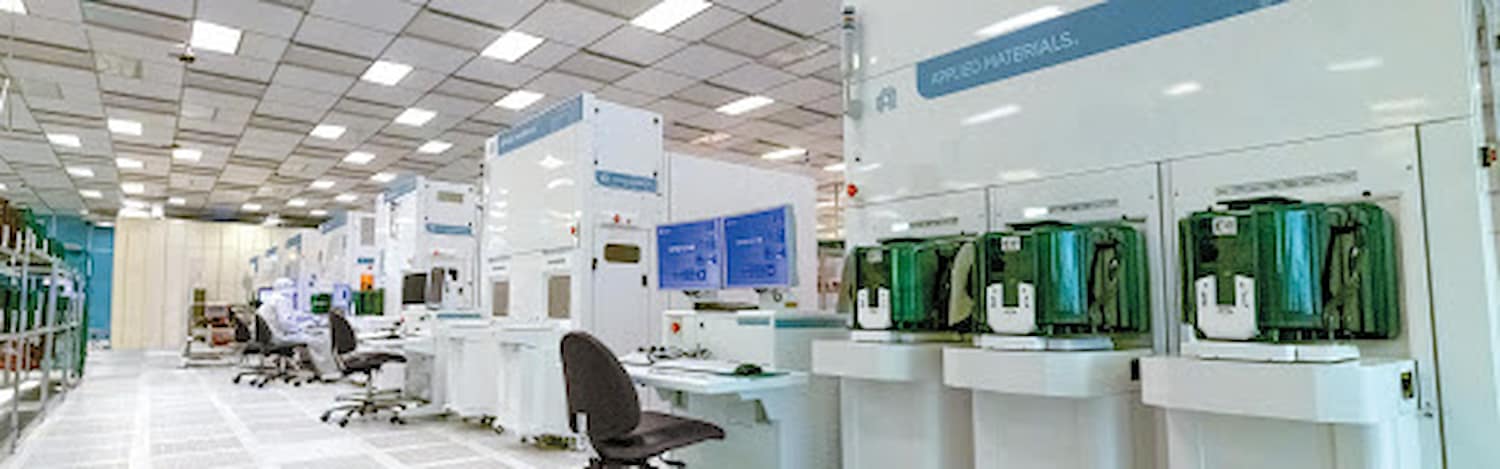
Client: Applied Materials, a global semiconductor equipment manufacturer
Challenge: Complex technical environment with expert workflows dependent on undocumented SME knowledge
Solution: Engineered knowledge layer using information architecture and knowledge engineering methodology
Measured Results:
Reduced time-to-resolution for equipment issues
Faster diagnosis through structured troubleshooting pathways
Consistent expert-level recommendations across the technician workforce
Annual savings: $50 million per year
Key insight: This outcome was achieved through information architecture and knowledge engineering, not LLM capabilities alone.
While most consulting firms are discovering knowledge engineering today, Earley Information Science has spent decades building, refining, and applying the very practices that make enterprise AI possible.
Information Architecture–Directed RAG (IAD-RAG) | A seven-layer methodology ensuring RAG implementations retrieve accurate, contextually appropriate content: (1) Semantic Foundation, (2) Componentization, (3) Structural IA, (4) Knowledge Mapping, (5) Retrieval Layer Engineering, (6) Prompt Governance, (7) Oversight and Maintenance.
VIA (Virtual Information Architect) | A SaaS platform that accelerates ontology development, taxonomy generation, metadata modeling, and content alignment using LLM-powered templates, expert-verified definitions, and reusable architecture patterns.
The AI Readiness Architecture Pilot is designed for organizations with the following characteristics:
|
Organizational Characteristic |
Example Industries |
|
Complex products with multiple configurations |
Manufacturing, industrial equipment, and medical devices |
|
Knowledge-driven processes |
Insurance underwriting, financial risk, and clinical trials |
|
Deep technical expertise in the workforce |
Field service, engineering, and scientific research |
|
Long-lived, highly technical documentation |
Aerospace, defense, life sciences, and energy |
|
High stakes for accuracy and safety |
Healthcare, pharmaceuticals, and regulated industries |
|
AI trust requirements before deployment |
Financial services, government, and critical infrastructure |
Strategy without architecture invites scope creep. The AI Readiness Architecture Pilot delivers:
AI cannot be bolted onto unstructured knowledge. Content must be engineered for retrieval.
RAG systems perform only as well as the information architecture beneath them. Similarity is not relevance.
Generative AI is an engineering discipline, not a capability that emerges from model selection alone.
Learn how your organization can deploy a working RAG pilot and create a roadmap for scaling trusted, domain-aware AI across the enterprise.