
The conference room atmosphere shifted palpably when the CEO and COO entered. What moments earlier had been an optimistic gathering—engagement teams confident, client core members smiling, everyone anticipating positive reception—transformed into something altogether different. The outdoor products manufacturer's transformation program presentation was about to reveal fundamental disconnects that plague enterprise technology initiatives.
Our consulting engagement had delivered exactly what was requested: comprehensive future-state digital architecture with implementation roadmaps supporting customer experience transformation. The client's technical team had enthusiastically endorsed every detail. The plan provided sufficient specificity for immediate foundational work while identifying quick wins that would build stakeholder support. Timelines reflected realistic assessments of organizational capabilities. We had developed innovative methodologies to address the client's complex challenges, structured deliverables around measurable business outcomes, and aligned the roadmap with maturity progression. The work represented consulting excellence.
Then the CEO's body language began signaling trouble—folded arms, visible impatience, furrowed brow. Within minutes, he interrupted the presentation entirely and unleashed frustration about deliverables he didn't care about and details that missed his actual needs. His demand: tell him what it would cost to achieve the desired outcomes, period.
The Specification-Expectation Gap
This dramatic breakdown revealed misalignments that occur more frequently than most organizations acknowledge. The initial four-week engagement focused on current state evaluation and high-level planning—deliberately scoped to exclude detailed cost estimation, which would require deeper discovery. Yet somehow, the executive sponsor expected comprehensive budget projections suitable for board presentation.
How does such fundamental misalignment occur? Several contributing factors emerged. The company lacked a CIO, leaving a technical program lead to interpret between business leadership and consulting teams. This intermediary adopted a protective stance, limiting direct communication between business leaders and technical resources. He positioned himself as the proxy for executive needs but never explicitly validated expectations within the engagement's defined scope. Despite delivering precisely what technical stakeholders requested, the effort failed to address the CEO's actual requirements.
This raises a critical question: even if complete cost projections had been possible, would stating "twenty million dollars over three years" have provided meaningful decision support? The figure itself holds limited value without understanding how resources would deploy, how the program aligns with current capabilities and processes, what organizational maturity enables, how the technology stack integrates, what employee bandwidth exists, which skill sets require development, what ongoing resource commitments are needed, and how governance will function.
Multi-year programs spanning organizational boundaries contain extensive complexity, numerous dependencies, and deep process knowledge requirements. They demand substantial change management. Properly defining functionality along with internal and external costs—spanning software, services, architecture, data remediation, process evolution, cultural adaptation, governance frameworks, and analytics capabilities—requires weeks or months of rigorous planning and requirements development.
Engaging Business Leadership Effectively
Executives cannot make informed investments without examining operational realities. Technology decisions inevitably require business stakeholder engagement—process owners, department leaders, marketing teams—at appropriate timing and depth. Business leaders respond more effectively to structured options than open-ended inquiry. Rather than asking what processes should be, present three alternative process models with comparative advantages. Instead of querying about business objectives, acknowledge universal aspirations around customer experience, revenue growth, and cost reduction, then ask which priorities matter most before exploring specific obstacles.
Frame typical barriers to strategic objectives, then follow with: "Which of these challenges most align with your situation?" This approach respects executive time while surfacing crucial context. The most critical program parameters executives require include anticipated outcomes, supporting evidence for investment decisions, realistic execution plans, ongoing success measures, and long-term program ownership structures. These distill into four essential questions:
- What investment level does this require?
- What capabilities and outcomes will we achieve?
- How do we confirm the program remains on track?
- Who assumes accountability if results fall short?
Structuring Communication From Macro to Micro
Both the client technical team and our consulting group erred by starting with granular detail. We methodically explained obstacles, issues, and remediation approaches for each component—product data quality, customer information systems, supporting content infrastructure, analytics insights. For instance, a comprehensive thirty-factor evaluation of their digital asset management revealed extensive remediation needs: system integration, content cleanup, image rights clearance, asset retagging, process consolidation. The required investment approached several hundred thousand dollars, though quick wins would offset portions.
Their outsourced e-commerce vendor significantly constrained their emerging hybrid dealer-direct sales model. Product data suffered from serious quality problems. Analytics occurred in departmental silos using inconsistent tools and naming conventions, causing inefficiency and delaying insight activation. The presentation thoroughly documented these challenges as building blocks for executable transformation plans. What remained absent: effort estimates for each phase aggregating to comprehensive program investment. Those projections fell outside our initial engagement scope but would constitute the subsequent phase. We had completed current situation evaluation and initial roadmap development; detailed planning with cost estimation required additional discovery work.
Visual Program Frameworks
Executives who initially resist detailed immersion respond well to visual program frameworks providing overview and comprehensive scope. Effective visualizations show multiple work tracks broken into phases with specific milestones, communicating complex program structures simply and graphically. Previous presentations demonstrated this approach successfully with executive audiences seeking timeline clarity, project composition within workstreams, and responsibility assignment.
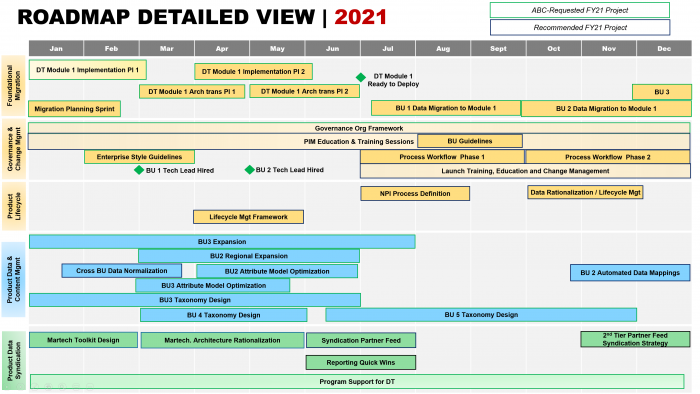 Figure 1: Large-scale transformation complexity visualized across dimensions and timelines
This methodology begins at the macro level, then decomposes the big picture into specific phases, workstreams, and ultimately discrete projects requiring completion. One client program broke down into over sixty distinct projects. This approach potentially matched what the CEO sought—eventually decomposing to identical challenges and issues while starting from strategic overview rather than tactical detail.
However, initial engagement scope couldn't encompass such comprehensiveness. We could provide order-of-magnitude estimates for comprehensive solutions, creating something analogous to Heisenberg's uncertainty principle for large technology programs: broader scope yields less precise effort estimates. Executives may require this strategic perspective, but execution teams need substantially greater detail. Further decomposition occurs at project levels, with work breakdown structures, task assignments, resource requirements, and interdependency mapping.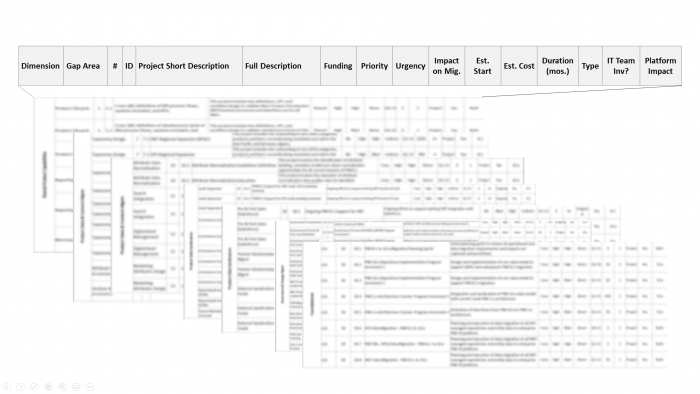
Figure 2: Phases and workstreams decomposed into discrete project components
Validating Assumptions Before Crisis
The fundamental disconnect stemmed from inadequate understanding—by both client core team and our consultants—of deliverable expectations. The client core team, comprised entirely of technical personnel, intermediated by interpreting executive needs. To some degree, they shielded executives from direct consultant inquiry or approach validation. A lunch meeting with executives might have provided such opportunity, but the customer team leader explicitly outlined forbidden topics—including project expectation questions. The technical lead wanted detailed architecture and remediation roadmaps. The executive needed comprehensive program costs for board presentation.
The critical question "What will you do with project results?" frequently produces divergent answers across business and technical perspectives. Business stakeholders want destination clarity, cost to arrival, and return on investment. Technical teams want implementation starting points, technical specification detail, and challenge remediation approaches.
The Hidden Organizational Dynamic
Yet another dimension complicated this situation. The executive later confided that his criticism was performative—intended to challenge his team rather than genuinely reject the plan. He actually appreciated the presented approach despite excessive detail. His frustration targeted his team's timidity and risk aversion. Rather than confidently standing behind recommendations, they positioned the consulting firm as a test balloon to gauge CEO reaction. If he approved, they would endorse it; if not, they had a convenient scapegoat.
The CEO recognized this dynamic immediately. When he criticized the plan, not one previously enthusiastic team member defended the approach or affirmed confidence in the methodology. He may have raised some legitimate concerns, but his team's silence spoke volumes. While blaming executive poor behavior remains tempting, standing up to strong-willed, impatient, opinionated leaders becomes easier when teams genuinely believe in their work and consider it organizationally optimal. With such conviction, articulating risks and benefits of alternatives, then withstanding challenges to their reasoning, would have proven more feasible.
Building Communication Foundations
Multiple lessons emerge from this experience applicable far beyond digital transformation contexts. Communication stands paramount. The core team never understood what executives needed to hear for project buy-in, preventing them from communicating those needs to consultants. Conversely, executives often lack sufficient ground-level understanding to believe proposed budgets and timelines or comprehend work nature. Why does this disconnect persist? Do they receive appropriate detail levels and answers to their concerns through trusted team members, or do they inadequately communicate their questions?
In this situation, the executive lacked patience for details because he recognized his team's weak commitment to the plan. That dynamic outweighed project specifics. He understood that if circumstances deteriorated, the team would immediately blame others rather than owning and defending their strategy. This left him with minimal confidence that projections would prove accurate or execution practical.
Politics and gamesmanship aside, honest communication, assumption questioning, and expectation validation across organizational levels remain essential. Consider these practices:
Validate expectations by asking what decision-makers will do with project results. When teams lack direct decision-maker access, provide intermediaries with clarification checklists defining successful outcomes. What specific organizational needs exist? Understanding investments required for executive socialization? Proposing budgets for approval? Allocating approved resources? Determining accounting treatment for capitalizable versus operating expenses? Approving new or continued initiative investments? Justifying past and ongoing investments? Planning project phases? Developing governance and long-term management accountability?
Implementation Best Practices
Additional approaches strengthen executive engagement and program alignment. Surface short-term benefits and quick wins prominently during presentations. Complex programs require visual communication avoiding detail overload, with graphics enabling deeper exploration when executives desire it. Articulate projected improvement impacts and return on investment alongside opportunity costs of inaction. Commit to capturing baseline metrics on target processes enabling before-and-after comparisons. Explain program tracking mechanisms and milestone communication cadences.
Corporate culture awareness matters significantly. The customer team leader's prohibition on discussing project expectations at our lunch should have signaled red flags about constrained communication flows. The CEO may have cultivated a culture where failure fear or criticism avoidance prevented teams from affirming belief in plans. Understanding what matters most to executive audiences determines messaging emphasis. Always ask: "What happens next? What will you do with this answer?" Responses to those questions maintain program alignment with executive sponsor needs and focus attention on success-critical factors.
When technical teams operate as intermediaries between executives and implementation resources, communication breakdowns become almost inevitable. Direct validation conversations, even brief ones, prevent catastrophic misalignments. The difference between "here's the detailed architecture you requested" and "here's the investment framework you need" determines whether presentations succeed or implode spectacularly in conference rooms where body language shifts and patience evaporates.
Note: A version of this article appeared on CustomerThink and has been revised for Earley.com.